Math in wine? You betcha!
From the symmetry of a single snowflake, to plants abiding by the Fibonacci sequence (a sequence where each number is determined by adding together the two numbers that precede it. For example: 1, 2, 3, 5, 8, 13, 21, 34, 55, and so on) for their leaf, petal and seed formation, to the golden ratio found in architecture, art, music and much more … there seems to be math in everything … even wine!
In the Vineyard
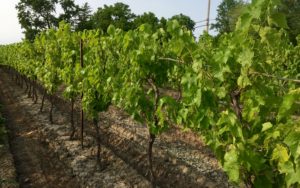 Management in the vineyard is mathematical. Vines are usually planted 3 feet apart, and there is usually an average of 9 feet between vine rows. During winter pruning, a precise number of buds are left for future fruiting shoots. For every bunch of fruit, 7 leaves are needed to produce enough food (carbohydrates). Therefore crop levels are determined mathematically to keep vines healthy and in balance so they can produce quality fruit. And we haven’t even touched upon management of the 16 essential soil nutrients for plant metabolism nor how to calculate the amount of sugar in the berries. Uh, huh … all math!
In the Cellar 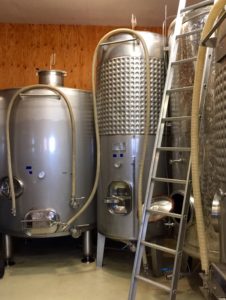
Although most people have romantic notions about wine, those making wine know that math is involved. After the grapes have been picked at their peak ripeness, it’s time to convert those sugars into alcohol (and carbon dioxide) through fermentation. Each sugar molecule is converted to two alcohol and two water molecules, thus 180 grams of sugar produces 92 grams of alcohol and 88 grams of carbon dioxide. This is important as winemakers must calculate potential alcohol of their wine. But that’s not the only thing requiring calculation. Any additions or corrections must be calculated. For example, how much yeast to use per litre of juice, measuring the pH and making acid adjustments if necessary, and how much sulphur dioxide is needed to control microbial activity. (Note: organic wine making must have lower levels of SO2.) So again … mostly math!
Art + Science
Yet fear not! For wine romantics, there is some art combined with the science to produce a lovely bottle of wine. There are innate and experiential factors that winemakers call upon during wine production … just like a good chef or baker in the kitchen.
Fun Facts ~ Math & Wine
- a cluster of wine grapes contains on average 100 berries (this varies according to grape varieties)
- a grape berry weighs 1.6 grams on average
- on average, a bottle of wine contains 7 clusters of grapes
- a glass of wine contains approx. 1 cluster of grapes
- a single vine can produce 2-3 bottles of wine
- why do we use tons/acre but grams, litres and hectolitres in Ontario?
Do you have any favourite math examples when it comes to wine?
We’d love to hear from you.
 Frog Blog ~ Want Better Tasting Wine? Try A Different Glass!